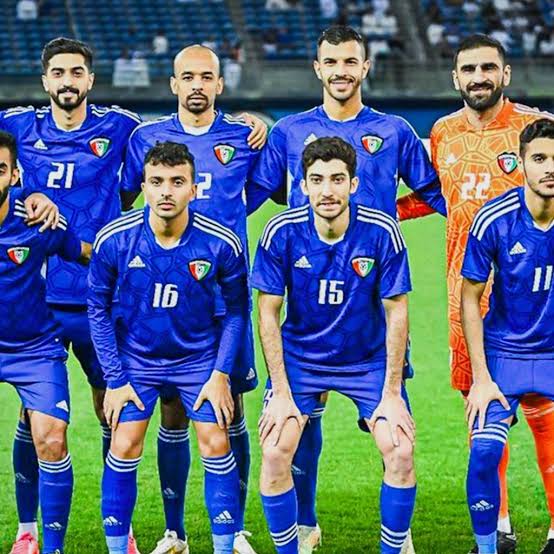
From Heartbreak to Hope: Kuwait’s Brave 2026 World Cup Journey Sparks Belief in a Brighter Football Future
For much of modern football history, hope in Kuwait has lived quietly.
Sometimes it arrived loudly, inside packed stadiums where chants echoed into warm desert nights. Sometimes it hid in old memories—stories told by older generations who remembered a time when Kuwaiti football stood proudly among Asia’s finest. And sometimes, hope disappeared altogether, buried beneath disappointment, missed opportunities, and the painful feeling that the glory days had drifted too far into the distance.
Yet football has a strange way of rebuilding belief.
Even when results hurt.
Even when dreams collapse.
Even when the destination remains frustratingly out of reach.
That is why the story of Kuwait’s journey toward the 2026 FIFA World Cup became more than a qualification campaign. It became something deeper—a story about resilience, identity, patience, and a nation beginning to believe again.
For the supporters of Kuwait national football team, heartbreak may have arrived before the finish line, but so did something equally important:
Hope.
A nation chasing old memories
Football has always carried emotional weight in Kuwait.
For older supporters, memories still live vividly in conversations and cafés. They remember when Kuwait was not simply participating in Asian football but competing with confidence and authority. They remember the historic achievement of reaching the 1982 FIFA World Cup in Spain—the nation’s first and only appearance on football’s grandest stage.
Back then, Kuwait represented ambition without fear.
The team stepped into global football carrying the expectations of a small but passionate nation, and although results did not lead to progression, merely standing on that stage mattered. It symbolized possibility.
But football changed.
Asia became more competitive.
Infrastructure elsewhere improved rapidly.
Powerhouses grew stronger, while emerging nations invested heavily in youth systems, facilities, and tactical development.
For Kuwait, the years that followed became complicated.
There were flashes of promise, moments of optimism, and occasional tournament excitement. Yet consistency remained elusive. Administrative problems, changing football structures, and periods of uncertainty slowed progress.
The dream of returning to the World Cup slowly transformed from expectation into distant hope.
And for many supporters, painful questions began to emerge.
Would Kuwait ever return?
Could the national team once again matter at the highest level?
Would younger generations ever experience the joy their parents spoke about?
The 2026 dream begins
Then came the road to 2026.
This World Cup felt different.
Expanded to 48 teams, qualification opportunities increased, especially within Asia. Suddenly, nations that once stood on the outside looking in began to imagine themselves walking through the door.
Across Kuwait, belief quietly resurfaced.
This was not blind optimism.
Nobody expected miracles overnight.
Supporters understood reality. The gap between Kuwait and Asia’s elite remained significant. Teams such as Japan, South Korea, Iran, Saudi Arabia, and Australia possessed deeper squads, stronger systems, and more experience.
But football rarely asks nations to dream rationally.
It asks them to believe.
And Kuwait believed.
The campaign began with cautious determination.
Players entered camps carrying pressure but also possibility. Coaches emphasized discipline. Fans debated lineups. Social media buzzed with conversations about tactics, squad choices, and qualification mathematics.
Something had changed.
People were paying attention again.
More than results
As qualification unfolded, Kuwait showed signs of growth.
Not perfection.
Growth.
Matches revealed a team trying to rediscover competitive identity. At times, performances were gritty rather than glamorous. There were moments of frustration and games where quality gaps became painfully visible.
But there were also signs of courage.
The team fought.
Players tracked back relentlessly. Midfielders battled for every loose ball. Defenders threw themselves into challenges as if carrying the expectations of millions.
The football was not always beautiful.
But it mattered.
Because supporters recognized something they had missed:
Effort tied to purpose.
There were evenings when Kuwait looked capable of surprising stronger opponents. There were moments when the nation allowed itself to imagine what qualification could feel like.
Could this finally be the generation?
Could history return?
In homes, cafés, and stadium conversations, the impossible slowly began to feel imaginable.
Heartbreak arrives
But football, as always, can be merciless.
The margins proved cruel.
Dropped points.
Missed chances.
Small tactical errors punished by stronger opposition.
Moments that looked insignificant suddenly became devastating in hindsight.
Qualification slowly slipped away.
The mathematics became difficult.
Then harsher.
Then impossible.
The dream ended before the final destination.
Officially, Kuwait’s path to the 2026 World Cup was over.
For supporters, disappointment arrived immediately.
It hurt because belief had returned.
Losing hurts more when hope feels real.
There were no dramatic celebrations.
No ticket booked for North America.
No triumphant headlines declaring Kuwait’s return to global football.
Only silence.
Only reflection.
Only questions.
Again.
Yet something important survived
But this time, something felt different.
The disappointment did not resemble surrender.
There was sadness, yes.
But also pride.
Supporters looked beyond elimination and noticed something meaningful: Kuwait had progressed deeper into qualification than many expected. The team had competed. The national conversation around football had reignited.
Most importantly, young supporters cared again.
Children watched qualifiers with excitement.
Teenagers debated tactics online.
Families gathered around televisions hoping—not expecting, hoping.
That matters.
Football nations are not rebuilt overnight.
They are rebuilt through emotion.
Through patience.
Through repeated moments that slowly convince people the future may look different.
And Kuwait began showing signs of exactly that.
The players who carried pressure
Behind every campaign lies sacrifice invisible to outsiders.
National team football is emotional weight disguised as sport.
Players leave clubs to represent flags.
They carry criticism loudly and praise briefly.
Every missed pass becomes public discussion.
Every loss becomes national disappointment.
For Kuwait’s squad, qualification became both burden and privilege.
They knew expectations were rising.
They understood what World Cup qualification would mean—not just professionally, but emotionally.
Yet even when results became difficult, the effort rarely disappeared.
Players continued running.
Competing.
Fighting.
Representing.
Sometimes courage does not look like victory.
Sometimes courage looks like continuing despite inevitable disappointment.
A brighter football future?
Perhaps the most satisfying part of Kuwait’s story lies not in what happened, but in what may come next.
The campaign reminded everyone of something important:
The dream is still alive.
Kuwait is no longer viewed purely through nostalgia. Conversations have shifted toward rebuilding, investment, youth football, coaching development, and long-term ambition.
Questions are becoming constructive instead of hopeless.
How can talent pipelines improve?
How can local football strengthen?
How can the next generation be prepared better?
These are healthy questions.
They suggest movement.
And movement matters.
Because football success rarely appears suddenly.
It grows.
Quietly.
Patiently.
Painfully.
From heartbreak to hope
The easiest headline would have been failure.
“Kuwait eliminated.”
“Kuwait misses out again.”
“Kuwait falls short.”
Those headlines are factual.
But they are incomplete.
Because football stories are not only about endings.
They are about momentum.
Emotion.
Identity.
Possibility.
Kuwait did not reach the 2026 World Cup.
That part hurts.
Yet somewhere inside the disappointment lives something stronger than defeat:
Belief.
Belief that the gap can shrink.
Belief that future campaigns can look different.
Belief that children watching today may celebrate tomorrow.
For now, the stadium lights dim.
The chants grow quieter.
The dream pauses.
But it does not disappear.
Because in football, hope survives even after heartbreak.
And for Kuwait, hope may finally be growing louder again….
Translate to Kuwaiti Arabic