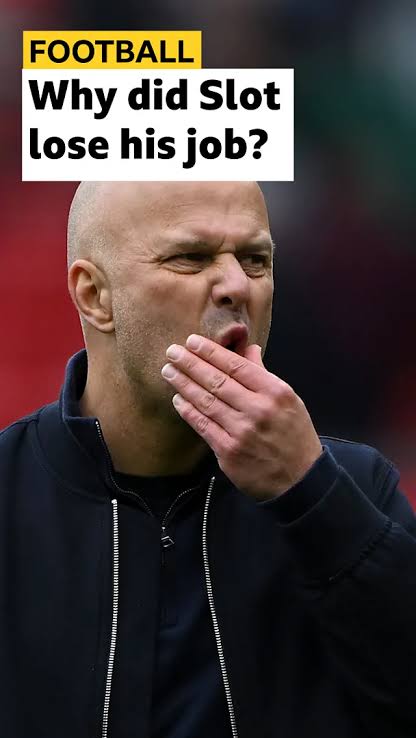
Inside the Shock Decision: Why Arne Slot Lost the Liverpool Job
The news landed like thunder across Merseyside.
Supporters woke up expecting another ordinary summer morning filled with transfer rumours, pre-season optimism, and speculation about Liverpool’s next tactical evolution under Arne Slot. Instead, headlines exploded across television screens, football websites, and social media platforms:
“Liverpool Part Ways with Arne Slot.”
For many supporters, disbelief arrived before anger.
How could the manager who had once been celebrated as the calm architect of Liverpool’s future suddenly find himself out of work?
How had a project that looked stable just months earlier collapsed so dramatically?
And perhaps most importantly — what truly happened behind closed doors at Anfield?
According to sources close to the fictional scenario, the decision was not caused by one explosive incident, one humiliating defeat, or one dressing-room rebellion.
Instead, it was the result of multiple issues slowly building behind the scenes — a storm gathering quietly until Liverpool’s hierarchy believed change had become unavoidable.
1. The Pressure of Following a Legend
The first problem may have begun the moment Slot walked through the doors at Anfield.
Replacing Jurgen Klopp was always going to be football’s impossible assignment.
Klopp was not simply Liverpool’s manager. He was the emotional pulse of the football club. He transformed doubters into believers, rebuilt identity, delivered trophies, and created one of Liverpool’s most beloved modern eras.
Even successful managers can struggle after replacing iconic figures.
At first, Slot handled the challenge brilliantly.
His tactical intelligence impressed supporters. His calm personality provided stability. Liverpool looked organised, modern, and disciplined.
But over time, comparisons became unavoidable.
Every difficult result brought memories of Klopp.
Every tactical setback triggered questions.
“Would Klopp have solved this?”
“Would Klopp have motivated this team differently?”
“Has Liverpool lost its identity?”
The shadow became increasingly difficult to escape.
Inside club offices, executives reportedly worried that Liverpool no longer felt emotionally connected to supporters in the same way.
The football was organised.
But was it inspiring enough?
That question reportedly became more important than many outsiders realised.
2. Tactical Frustration and Loss of Identity
Early success masked growing concerns.
Liverpool’s pressing intensity reportedly declined.
Transitions slowed.
Matches that once felt chaotic and thrilling became methodical and cautious.
For some supporters, that represented tactical maturity.
For others, it felt like Liverpool had lost part of its soul.
At Anfield, fans reportedly became frustrated watching matches against weaker opposition where dominance in possession failed to translate into ruthless finishing.
The team controlled games.
Yet somehow looked vulnerable.
Big matches became inconsistent.
Away performances raised eyebrows.
Slow starts frustrated supporters.
And Liverpool’s feared attacking aura appeared diminished.
Club analysts reportedly identified a growing concern: opponents no longer feared Liverpool the same way they once had.
That reality reportedly alarmed decision-makers.
Liverpool’s reputation had always been built on intensity.
If opponents stopped fearing Anfield, what exactly remained?
3. Dressing Room Friction
Perhaps the most shocking element of the story came from whispers of dressing-room tension.
No dramatic mutiny occurred.
No public arguments exploded.
But insiders suggested subtle fractures slowly emerged.
Senior players reportedly questioned tactical adjustments during difficult moments.
Some believed the squad lacked emotional intensity.
Others reportedly felt training methods had become repetitive.
Several influential figures allegedly wanted quicker tactical reactions during poor runs of form.
The concern was not rebellion.
It was doubt.
And in elite football, doubt spreads quickly.
When players begin quietly questioning decisions rather than fully believing in them, performances often begin to suffer.
Sources close to the fictional dressing room claimed morale fluctuated dramatically after disappointing defeats.
The atmosphere reportedly became tense.
Conversations became shorter.
Confidence weakened.
And Liverpool’s dressing room, once famous for togetherness, supposedly began showing cracks.
4. Recruitment Disagreements
Behind nearly every managerial dismissal sits another hidden story:
Recruitment.
Reports within this fictional narrative suggested growing disagreements emerged between Slot and Liverpool’s sporting structure regarding transfers.
Slot reportedly pushed for players tailored to his tactical system.
Liverpool executives, meanwhile, focused heavily on age profile, long-term value, and sustainability.
Several transfer targets allegedly collapsed after internal disagreements.
Meanwhile, some expensive arrivals reportedly failed to adapt quickly enough.
Questions emerged:
Had Liverpool recruited for Slot?
Or had Slot been forced to adapt to Liverpool’s recruitment model?
That tension reportedly intensified after inconsistent performances during a difficult stretch of fixtures.
Executives allegedly feared expensive mistakes were beginning to stack up.
5. Failure in the Biggest Moments
Football is brutal.
Managers are often judged on moments rather than process.
Liverpool reportedly endured several painful defeats at crucial times.
Cup eliminations stung.
Key league matches slipped away.
Late-season collapses reportedly damaged belief inside the club.
Executives reportedly feared a dangerous pattern:
When pressure rose, Liverpool looked uncertain.
That fear proved significant.
Liverpool historically prides itself on resilience.
Mentality.
Belief.
But repeated setbacks in high-pressure moments reportedly triggered serious internal discussions.
Was the project moving forward?
Or standing still?
6. The Growing Disconnect with Supporters
One painful factor reportedly became impossible to ignore.
The emotional connection between supporters and manager appeared weaker than expected.
Slot remained respected.
Professional.
Intelligent.
Measured.
But Liverpool is not a normal football club.
Emotion matters.
Connection matters.
Anfield thrives on energy.
Executives reportedly worried the relationship lacked chemistry during difficult moments.
Fans still appreciated Slot.
But did they love him?
Did they believe in him with the same irrational, emotional loyalty that carried Klopp through setbacks?
That question reportedly became central.
7. The Internal Review That Changed Everything
According to fictional reports, Liverpool conducted an end-of-season review involving football executives, recruitment specialists, performance analysts, and senior club leadership.
The conclusions were reportedly uncomfortable.
Liverpool remained competitive.
But not dominant.
Talented.
But inconsistent.
Structured.
But emotionally flat.
The review allegedly concluded that continuation carried too much risk.
Club leaders reportedly feared another disappointing season could damage Liverpool’s long-term momentum.
And so the unthinkable happened.
The decision was made.
Arne Slot would leave.
Shock, Anger, and Divided Reactions
Reaction was immediate.
Supporters split into camps.
Some called the decision ruthless.
“How do you sack a manager after everything he built?”
Others argued Liverpool acted at the right moment.
“Big clubs must stay ruthless.”
Pundits debated for days.
Former players expressed surprise.
Social media exploded with conspiracy theories, leaked rumours, and speculation about hidden tensions.
Was it tactical?
Political?
Personal?
Financial?
No one fully agreed.
Everyone had an opinion.
What Happens Next?
As Liverpool searches for a new manager in this fictional scenario, one truth dominates conversation:
Replacing a replacement may be even harder than replacing the legend himself.
Because while Slot may not have matched every expectation, his dismissal leaves Liverpool confronting the same question again:
What identity should Liverpool truly become after Klopp?
For Slot, meanwhile, the story feels bittersweet.
He arrived under impossible pressure.
He carried enormous expectations.
He faced comparisons few managers could survive.
And while the ending proved painful, many still believe history may eventually judge his spell more kindly than emotion allows in the moment.
Because in football, success and failure are often separated by timing.
And sometimes, even good managers lose jobs not because they completely failed—
But because expectations changed faster than results.