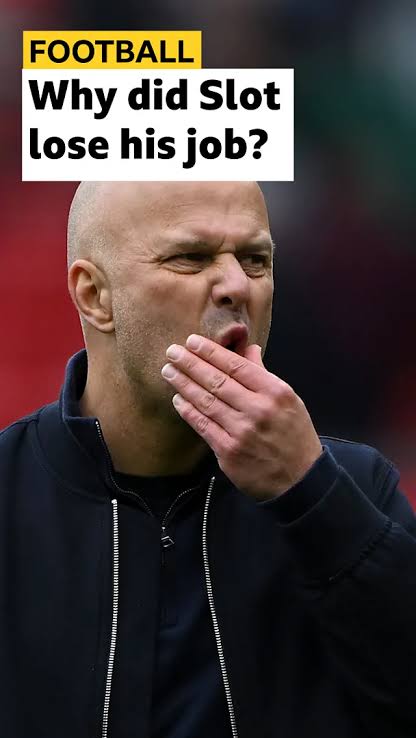
Liverpool Sack Arne Slot: Why Mo Salah and Curtis Jones Are Winners, While Ryan Gravenberch and Cody Gakpo Could Lose Out
Shockwaves move quickly at a football club the size of Liverpool.
In this fictional scenario, the dismissal of Arne Slot does not simply represent the end of a managerial reign — it becomes the beginning of a dramatic internal reset, one capable of reshaping careers, tactical systems, dressing-room hierarchies, and futures.
Because when a manager leaves, football rarely changes equally for everyone.
Some players suddenly find doors opening.
Others quietly begin worrying.
A new manager means new ideas, new favourites, and new expectations.
And in Liverpool’s dressing room, few names stand to gain or lose more than Mohamed Salah, Curtis Jones, Ryan Gravenberch, and Cody Gakpo.
For some, Slot’s departure could feel like liberation.
For others, it could represent the start of uncertainty.
Why Mohamed Salah Could Be One of the Biggest Winners
Every managerial change begins with one unavoidable reality at Liverpool:
What happens to Mohamed Salah?
Even deep into his Liverpool career, Salah remains the face of the attack, the dressing room superstar, and one of the most influential footballers in club history.
Yet under Slot’s imagined tactical evolution, questions reportedly began emerging.
Was Liverpool becoming too structured?
Too controlled?
Too system-oriented?
At times, Salah looked brilliant.
At others, observers wondered whether the Egyptian forward was being asked to sacrifice instinct for balance.
A more direct, emotionally charged manager arriving at Anfield could immediately rebuild the side around Salah’s strengths.
Suddenly, the attack becomes quicker.
Transitions become faster.
Freedom returns.
Instead of controlled possession phases, Liverpool could lean into chaos again — the kind of football where Salah has historically thrived.
In this fictional scenario, Salah becomes the emotional centrepiece of a rebuild.
The message from a new coach would likely be simple:
“Lead us again.”
More tactical freedom.
More attacking responsibility.
More opportunities to influence big moments.
A managerial reset often benefits established superstars because uncertainty naturally pushes clubs toward trusted figures.
And nobody at Liverpool carries more trust than Salah.
His voice inside the dressing room could become stronger.
His leadership role bigger.
His importance even more undeniable.
Instead of adapting to Slot’s project, Liverpool could once again adapt around him.
That is why Salah may emerge as one of the major winners.
Curtis Jones: The Local Star Who Could Suddenly Explode
Few players may quietly smile more at managerial upheaval than Curtis Jones.
The Liverpool academy graduate has spent years balancing expectation, inconsistency, injuries, and tactical experimentation.
At times, Slot reportedly valued Jones for intelligence and technical quality.
But in this imagined environment, the midfielder occasionally found himself caught between roles.
Too attacking to sit deep.
Too disciplined to fully attack.
Useful everywhere.
Guaranteed nowhere.
Managerial changes often reward adaptable footballers.
Jones fits that description perfectly.
A new coach searching for energy, identity, and local leadership may view Jones as essential.
Liverpool supporters love academy graduates.
Especially ones who understand club culture.
In difficult periods, managers often lean into emotional symbols.
Jones represents Liverpool.
He understands pressure.
He understands expectation.
He understands Anfield.
If Liverpool appoints a manager favouring aggressive pressing, box-to-box midfield running, and tactical aggression, Jones suddenly becomes incredibly valuable.
His ability to carry possession, press intensely, and arrive in dangerous areas may make him one of the biggest beneficiaries of tactical change.
For years, supporters have debated whether Jones can become untouchable.
In this fictional future, Slot’s departure could finally unlock that opportunity.
He stops being a squad option.
He becomes central.
Why Ryan Gravenberch Could Quietly Become a Loser
The irony surrounding Ryan Gravenberch is painful.
In many ways, Slot’s tactical philosophy suited him beautifully.
The Dutch midfielder possesses elegance.
Control.
Calmness.
Technical intelligence.
Under a coach prioritising positional structure and possession, Gravenberch had the chance to flourish.
Slot understood Dutch football principles.
He understood patient midfield rhythm.
He understood how to maximise technically gifted midfielders.
But football changes brutally fast.
A new manager may prefer intensity over elegance.
Energy over control.
Aggression over rhythm.
Suddenly, Gravenberch faces questions.
Can he press hard enough?
Can he dominate transitions?
Can he survive tactical chaos?
The concern is not talent.
Nobody doubts talent.
The concern becomes fit.
And football history repeatedly shows that some players accidentally become victims of managerial change.
A footballer perfectly suited to one coach may suddenly struggle under another.
If Liverpool appoint a more physically demanding coach, Gravenberch may face unexpected pressure.
Selection battles intensify.
Trust becomes uncertain.
And for the first time, transfer speculation quietly begins.
In football, instability often begins subtly.
Not headlines.
Just fewer starts.
Shorter appearances.
Growing rumours.
That possibility makes him one of the players who could quietly lose most from Slot’s departure.
Cody Gakpo: From Trusted Tactical Weapon to Uncertain Role?
Perhaps no player symbolises the risk more than Cody Gakpo.
Slot’s Dutch connections, footballing understanding, and tactical familiarity seemingly positioned Gakpo perfectly.
At times, the attacker looked like a manager’s favourite — trusted for versatility, intelligence, and tactical obedience.
Gakpo could play wide.
Central.
Between lines.
Inside compact attacking systems.
Managers love players like that.
But managerial change introduces danger.
New coaches often dislike “utility” players.
Instead, they prioritise specialists.
A manager demanding explosive wingers may favour pace.
A manager preferring traditional strikers may look elsewhere.
Suddenly, Gakpo’s flexibility becomes vulnerability.
Where exactly is his best role?
Left wing?
False nine?
Second striker?
Attacking midfielder?
Those questions could become louder.
In elite football, uncertainty is dangerous.
Once a player loses tactical certainty, confidence often suffers.
Minutes drop.
Pressure grows.
Narratives change.
The footballer once considered essential becomes labelled inconsistent.
For Gakpo, Slot’s exit may remove an important layer of familiarity and trust.
That alone could reshape his Liverpool future.
The Brutal Truth About Managerial Changes
Football rarely discusses this reality openly:
Managerial sackings are not equal-opportunity events.
They create winners.
They create losers.
A dressing room celebrating quietly while others panic is more common than supporters realise.
One player suddenly hears encouragement.
Another hears silence.
One sees opportunity.
Another sees danger.
That emotional shift often determines careers.
At Liverpool, Slot’s departure in this fictional scenario may be remembered not simply as the end of a coach — but as the moment careers moved in completely different directions.
For Salah, it could mean renewed freedom.
For Curtis Jones, a breakthrough.
For Ryan Gravenberch, uncertainty.
For Cody Gakpo, uncomfortable questions.
And while supporters focus on managers, tactics, and transfers, football inside dressing rooms usually works differently.
Players know the truth immediately:
When a manager leaves, somebody wins.
Somebody loses.
And nobody stays unaffected.